
Spring in Adelaide is a beautiful thing, but it’s also exactly when algae starts making itself at home. The days are warmer, the sun is stronger, and your pool has been quietly sitting through winter with lower chlorine demand and less circulation. Put those together and it only takes a few days for clear water to turn cloudy, then green.
The good news is that a green pool is almost always fixable. Here’s how to get it back, and how to keep it that way.
Why Pools Go Green in Spring
Algae needs three things to thrive: warmth, sunlight and a gap in your sanitiser. Spring delivers the first two, and the third is usually where things slip:
- Chlorine levels drop after winter, especially if the pump has been running less
- pH drifts out of range, which makes chlorine far less effective even when you’ve added plenty
- Circulation is poor, so algae spores settle in corners, steps and behind ladders
- Debris and pollen feed algae and use up your chlorine faster than you’d expect
Step-by-Step: Clearing a Green Pool
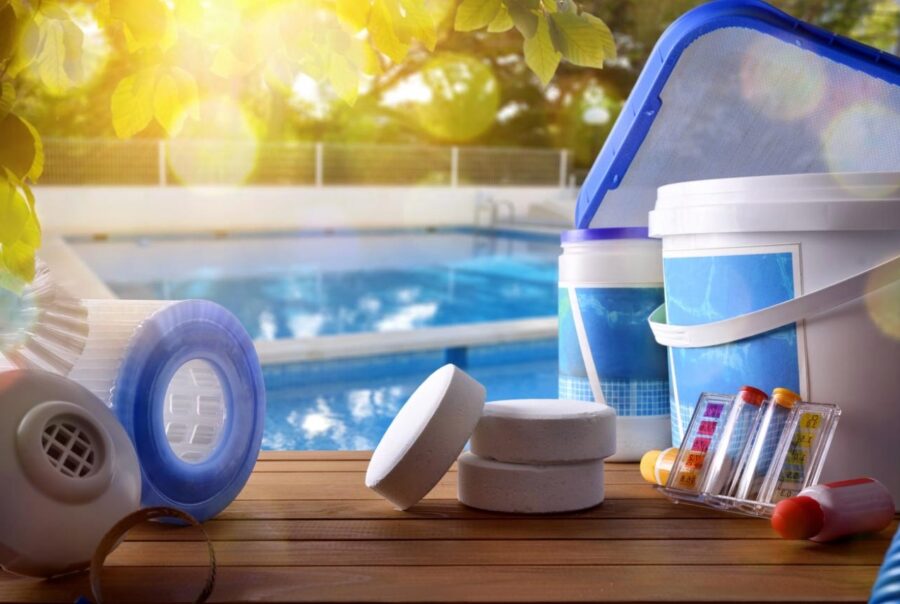
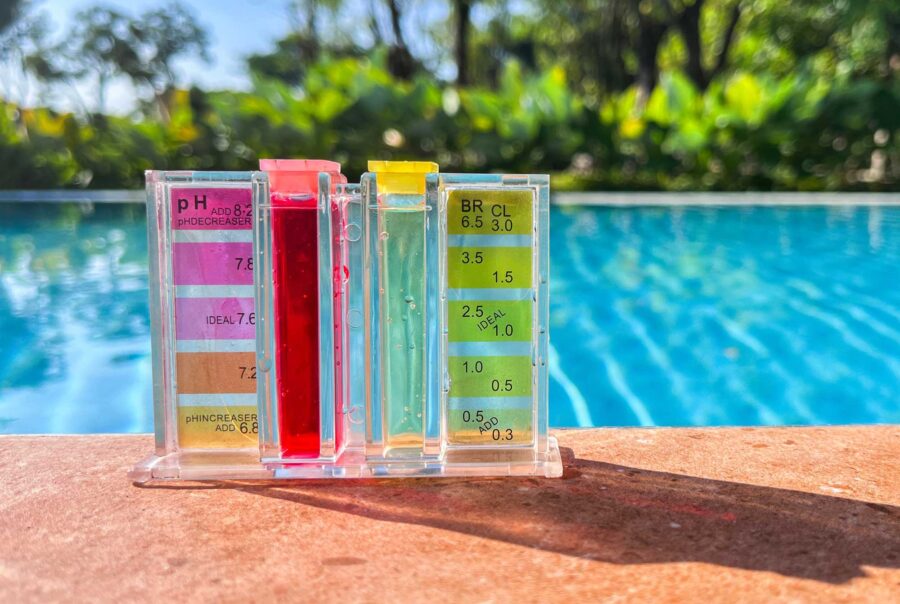
1. Test your water first. Before adding anything, check your pH, chlorine and alkalinity. If your pH is high, chlorine won’t do its job, so correct it first. Bring a sample into the shop and we’ll test it for free.
2. Clean out the system. Empty the skimmer and pump baskets, and remove any leaves and debris from the pool floor.
3. Brush every surface. Walls, floor, steps and corners. Brushing breaks algae off the surface so your chlorine can reach it.
4. Shock the pool. Add a pool shock treatment (follow the label and dose for your pool’s volume, which is why knowing your litres matters: see Why Do I Need to Know My Pool’s Volume?). It’s best done in the evening, and no one should swim until levels have dropped back into the safe range.
5. Run the pump and filter continuously. Let it run for 24 hours or more, and check the filter regularly. A heavily loaded filter will need a clean or backwash during the process.
6. Clear the cloudiness. Once the algae is dead, the water can look milky because of the dead material in it. A clarifier helps the filter pick up those tiny particles. Vacuum or run your robotic cleaner to remove what settles.
7. Retest and rebalance. Check your chlorine, pH and alkalinity again and adjust. Don’t skip this step, as it’s what stops the problem coming straight back.
Safety note: Never mix pool chemicals together, always add chemicals to water (not water to chemicals), and store everything sealed, cool and out of reach of children.
How to Stop It Coming Back
Once you’ve cleared it, prevention is far easier than another rescue:
- Test weekly through spring and summer, not just when something looks off
- Keep your pH in range so your chlorine stays effective
- Run your pump long enough each day for full circulation
- Brush regularly, particularly in corners and shaded areas
- Keep the filter clean and the baskets emptied
- Consider a regular algaecide dose as an extra layer of protection
- Use a robotic cleaner to scrub walls and floor on a consistent schedule (see Robotic Cleaners vs Manual Vacuuming)
Still Seeing Green?
Some algae types, like stubborn black or mustard algae, need a different approach. If your pool isn’t responding, don’t keep adding chemicals and hoping. Bring a water sample in and we’ll work out what’s going on and what you need to fix it.
Ready to get your water back to sparkling? Pop into the shop for a free water test, or get in touch with our team.
Century Pool and Spa is here to help.
📞 (08) 7225 0887
✉️ shop@centurypoolservices.com.au
🌐 www.centurypoolservices.au